Central Japan Connectionでは英語と日本語のホームページを公開しています。日本語版では、日本語ユーザーに向けて弊社のサービス内容や、海外のビジネス事情を日本語で紹介しています。また英語版では、海外ユーザーに向けて弊社のサービス内容や日本での旅行やビジネス事情を英語で紹介しています。
今回、Central Japan Connectionの英語版のページを作成し、公開しました。また英語版では、特に日本への旅行者に向けた情報も公開しています。そこでは、弊社が日本旅行で、おすすめしたい商品やサービス、そして商品や飲食店も紹介しています。英語版での掲載に興味がありましたら、ぜひご連絡ください。
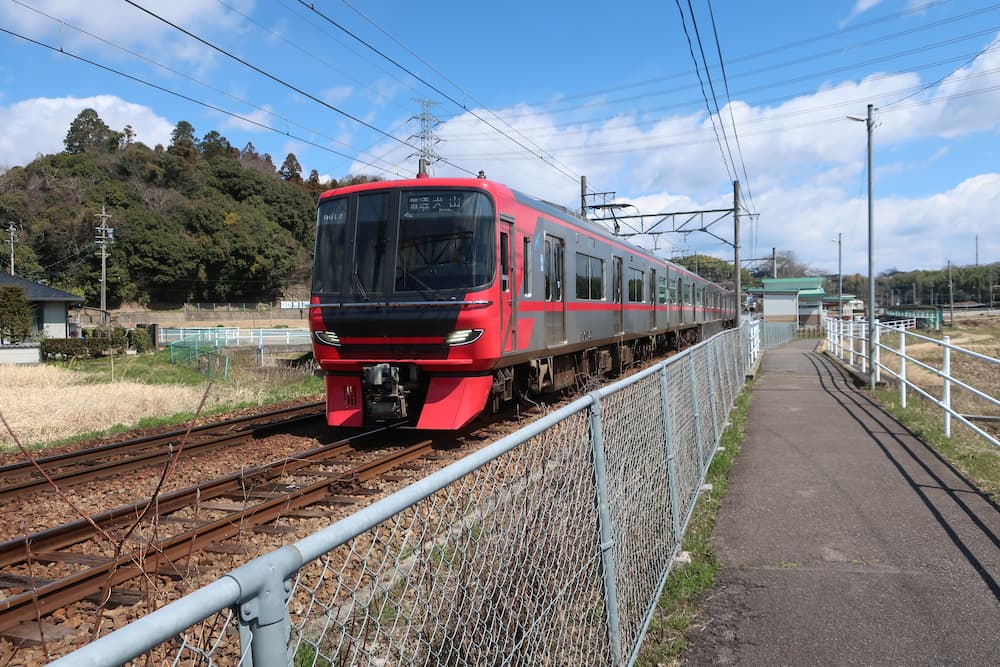
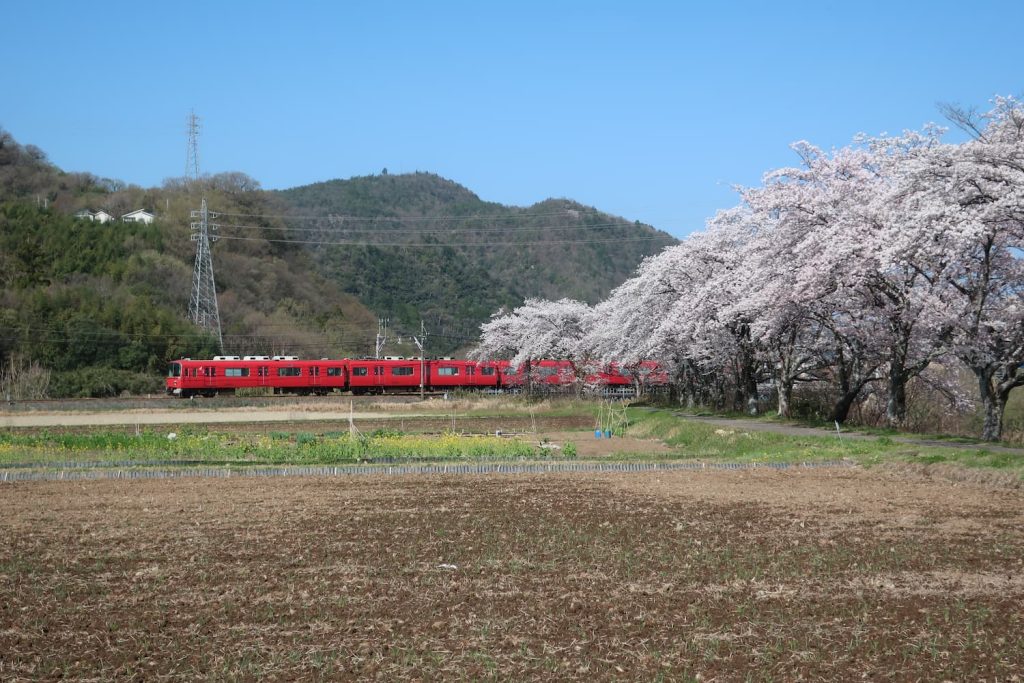
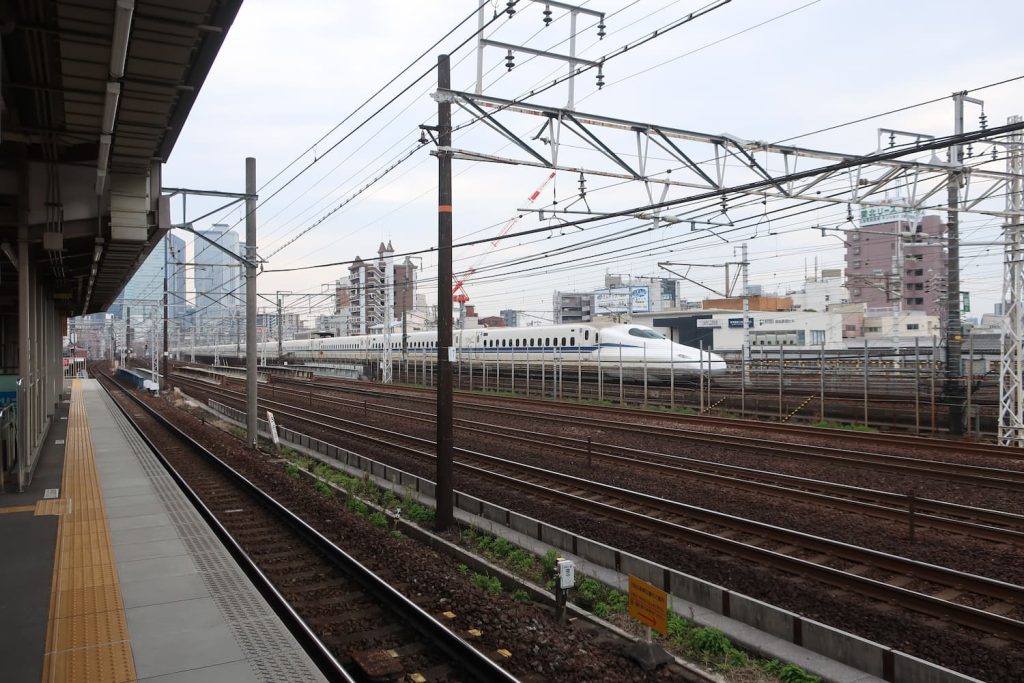
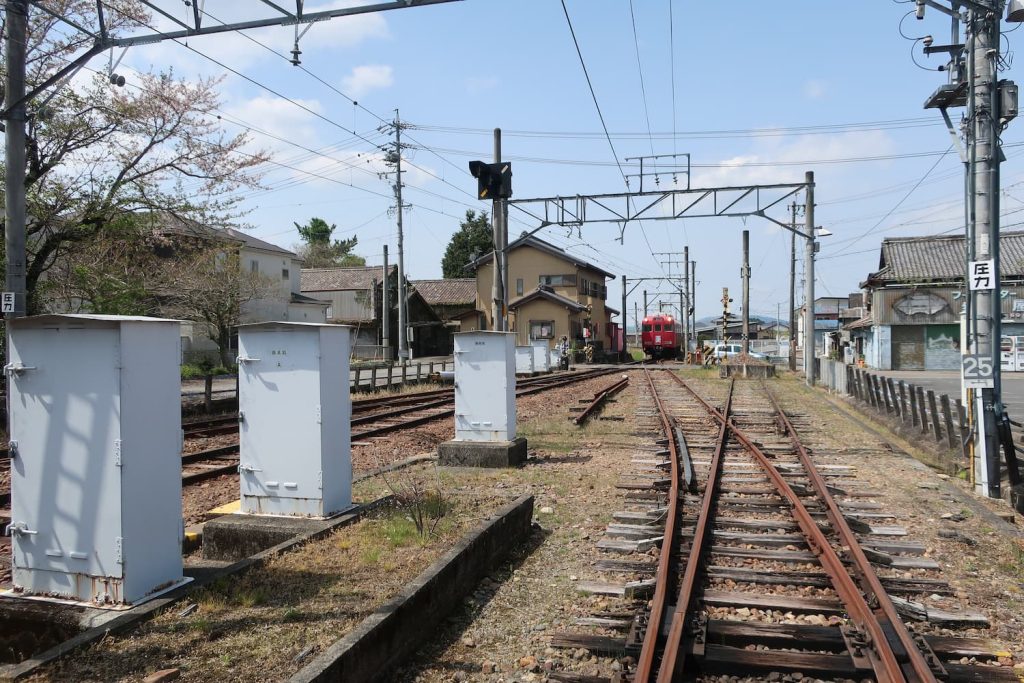
If you’re planning to travel in Japan, you’ll likely use the train. Japan has one of the most advanced and extensive railway networks in the world, making it easy to travel between cities and regions by train. Because of this convenience, trains are an essential mode of transportation for both locals and visitors.
However, Japan’s train system is not just about speed and convenience — it also comes with certain manners that passengers are expected to follow. Some of these are common sense and similar to what you might expect in other countries. But others are unique to Japan and may not be immediately obvious to travelers from abroad.
This article introduces important train etiquette in Japan that every visitor should know to travel smoothly and respectfully.
1. Reserved vs. Non-Reserved Seats on Japanese Trains
On trains like the Shinkansen, there are two types of seats: reserved (指定席) and non-reserved (自由席). If you purchase a non-reserved ticket, you cannot sit in a reserved seat even if it appears empty. In some countries, temporarily using empty reserved seats may be acceptable, but in Japan, this is considered rude and can lead to disputes.
Always sit in the correct section: non-reserved carriages for non-reserved tickets, and reserved seats only with a reserved ticket. You can sometimes purchase a reserved seat upgrade from the conductor onboard by paying the price difference, though this may not be possible during peak hours. To ensure you get a seat, it’s best to reserve in advance.
This seating policy also applies to many other express trains run by JR and private railway companies. If you’re unsure, ask a train staff member before taking a seat.
2. Taking Photos and Videos on Trains in Japan
Due to the rise of social media and livestreaming, filming on trains has become more restricted in Japan. Causing disturbances for online attention has led to increased regulations. Also, privacy is highly valued—capturing strangers’ faces, even in public places like trains, is often considered an invasion of privacy.
Shooting scenery through the train windows is fine. Filming inside the car is acceptable only if there are few passengers and no faces are visible. Avoid taking photos during rush hours, especially on crowded trains.
JR East prohibits commercial filming without permission, and Tokyo Metro bans unauthorized photography of passengers and employees. As these policies become more widespread, always film responsibly and avoid creating uncomfortable situations.
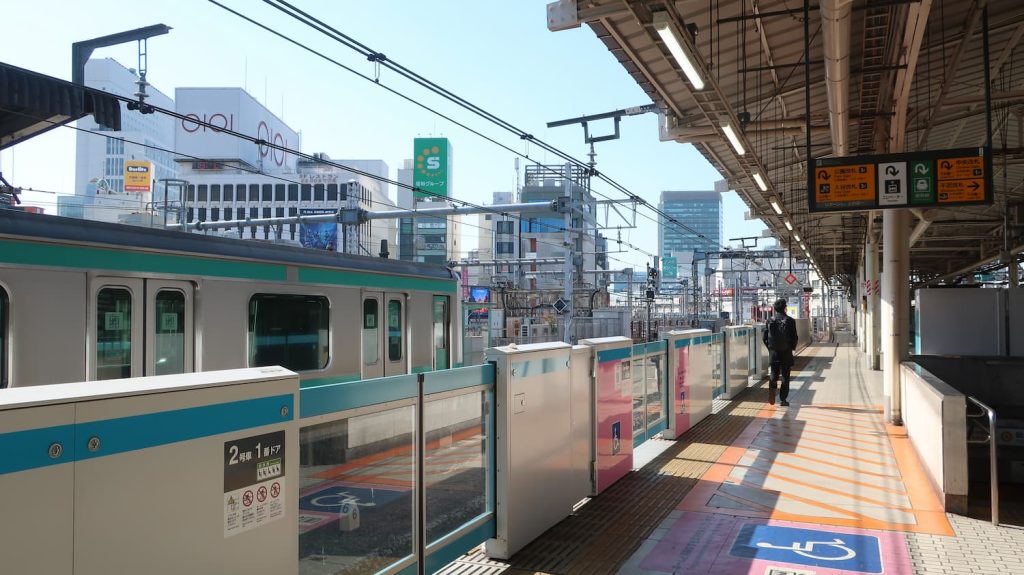
Japan’s urban rail systems are busy, especially during rush hours. That’s why platforms have clearly marked lines showing where train doors will open. It’s customary to stand in line and wait your turn to board—cutting the line or pushing ahead is considered very rude.
Even if no one is currently in line, always check for markings or signs and follow the order when boarding. Respecting this system helps everything run smoothly, particularly during the hectic morning commute (7–9 a.m.).
4. Eating and Drinking on Trains in Japan
Eating and drinking is generally allowed on most trains. However, it’s discouraged during rush hours, especially on crowded commuter trains in the morning (around 7–9 a.m.). During this time, trains are packed, and eating can be difficult and disruptive.
On long-distance trains like the Shinkansen or limited express services, eating is perfectly acceptable. Still, avoid foods with strong odors out of consideration for nearby passengers.
5. Backpack Etiquette: Wear It in Front During Rush Hour
Trains in Japan can get extremely crowded. In such situations, wearing a backpack on your back is inconsiderate—it may bump into others or block space. Most rail companies ask passengers to take off their backpacks or wear them on their front during peak hours.
This small gesture can make a big difference in ensuring a smoother and more comfortable ride for everyone.
6. Mobile Phone Etiquette on Trains
Unlike in some countries, talking on the phone inside Japanese trains is frowned upon. While texting, browsing, or using silent modes is fine, loud phone calls are considered rude.
If you must answer a call, keep your voice down and the conversation brief. On long-distance trains like the Shinkansen, move to a vestibule or designated area if possible. Respect the quiet atmosphere—especially during rush hours.
7. Don’t Let Children Stand on Seats with Shoes On
It’s common courtesy in Japan to keep train seats clean. Letting children stand on seats with shoes on is strongly discouraged, as shoes carry dirt and germs from outside.
If you’re traveling with children, either remove their shoes or make sure they sit properly. Parents are expected to ensure their kids do not disturb others or soil public seating.
8. Avoid Large Suitcases on Crowded Trains
Carrying large luggage like suitcases on crowded trains—especially during the morning rush (7–9 a.m.)—can cause major problems. Not only might you block others or get stuck yourself, but it may also prevent people from boarding or exiting smoothly.
If you’re traveling with big bags, avoid commuter trains during peak times. Consider using alternative transport like taxis or less crowded limited express trains.
9. Offer Priority Seats to Those in Need
Priority seats are reserved for the elderly, disabled, pregnant women, and passengers with small children. If someone who needs the seat boards the train, offer your seat without hesitation.
Even if the person declines, the polite gesture is always appreciated. Unfortunately, not everyone in Japan follows this rule, but as a visitor, you should respect this important part of Japanese train etiquette.
10. Don’t Rush the Train Doors—No Last-Minute Boarding
Running to catch a closing train door—called “kakekomi-jousha” in Japanese—is not only bad manners but also dangerous. It may delay the train, cause injuries, or even halt operations. Especially on punctual systems like the Shinkansen, this is taken seriously.
Instead, arrive early and wait for the next train if needed. Prioritize safety and be respectful of others’ time and space.
11. Women-Only Train Cars
Recently, women-only train cars have started to appear in some countries outside Japan. In Japan, they are already common on trains in major cities, including JR lines, private railways, and subways. Most train companies operate women-only cars during the morning rush hour. This is because trains become extremely crowded between 7 a.m. and 9 a.m., making it difficult for passengers to keep personal space. Unfortunately, this crowded situation can lead to incidents of groping. To help prevent this, train companies provide women-only cars, especially during busy hours.
Some companies operate women-only cars all day, not just in the morning, so it’s important to check the schedule. Women-only cars are usually marked on the train doors and body. Information is also shown on the platform. If you take the train in Japan, be sure to check the signs on the train and platform to know which car is for women only.
If you’re a vegetarian planning a trip to Japan, food might be one of your biggest concerns. While Japanese cuisine (Washoku) is known for being delicious and beautifully presented, it isn’t always easy for vegetarians to navigate. Unlike in many Western countries, vegetarianism isn’t yet mainstream in Japan, and the line between “vegetarian” and “non-vegetarian” can be quite blurred.
That’s because Japanese food culture often uses animal-based ingredients in subtle ways—especially in broths, sauces, and seasonings. But don’t worry! With a little preparation, you can still enjoy your culinary journey in Japan. This guide covers the essential things vegetarians should consider when dining in Japan.
1. Dashi – The Heart of Japanese Flavor
One of the most important things to know is the role of Dashi (出汁), a soup stock that forms the base of many Japanese dishes. While dashi can be made from kombu (kelp) or shiitake mushrooms, the most commonly used version comes from Katsuobushi (鰹節)—dried, fermented bonito (a type of fish).
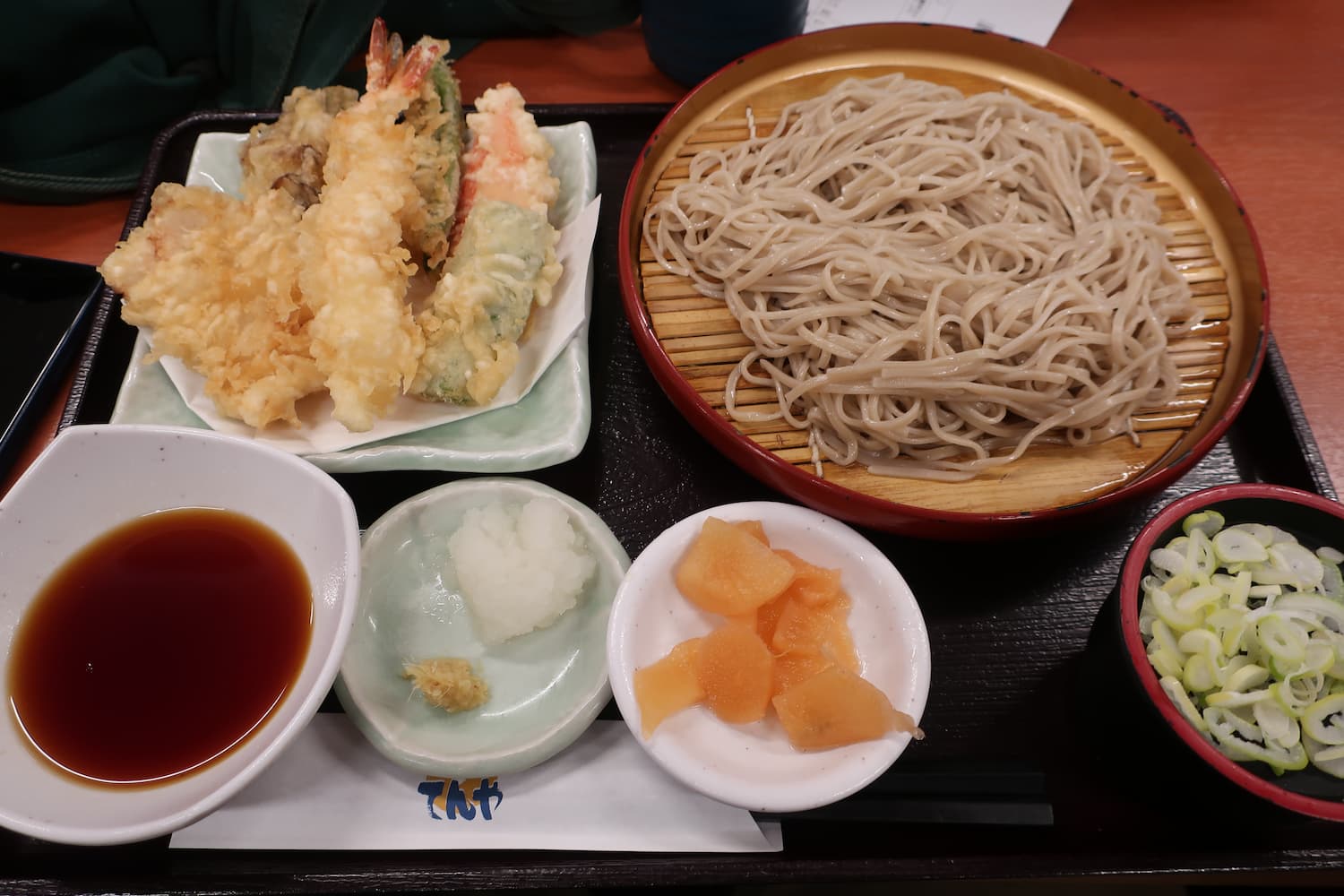
You’ll find dashi in miso soup, noodle broths (like udon and soba), simmered vegetables, and even in tamagoyaki (Japanese rolled omelet). Even something as simple as Ohitashi—blanched spinach with a savory dressing—often contains dashi made from fish.
So, even if a dish looks vegetarian, it may include animal-derived broth. Some restaurants do offer plant-based dashi made from kombu or shiitake—these are your best bet as a vegetarian in Japan. Look for restaurants that specifically mention vegetarian dashi or cater to plant-based diets.
2. Watch Out for Katsuobushi (鰹節)
Katsuobushi, those thin, smoky fish flakes, are another hidden ingredient to be aware of. They’re not only used in dashi but are also sprinkled on top of many dishes.
For example, Japan’s famous street foods like Okonomiyaki and takoyaki almost always come topped with Katsuobushi. Even if you skip meat or seafood in the ingredients, the bonito flakes on top make the dish non-vegetarian. Similarly, Furikake (seasoning sprinkled over rice) and side dishes like Ohitashi often include Katsuobushi.
3. White Sugar in Wagashi – Sweet, but Not Always Plant-Based
Traditional Japanese sweets, or wagashi (和菓子), might look like a safe choice for vegetarians. They often contain red bean paste (Anko) made from sweetened azuki beans and are served with mochi, in dorayaki, or as toppings on shaved ice.
However, many of these sweets use white sugar, which in some cases is processed using bone char. While not all vegetarians are concerned about this, those who are should be cautious. If you prefer to avoid white sugar processed with animal products, look for specialty vegan wagashi, which are starting to become more available in Japan’s larger cities.
4. Pescatarian? Japan Might Be Easier for You
If you eat fish but avoid meat—what’s known as pescatarian—you’ll find it much easier to enjoy Japanese cuisine. Fish plays a major role in traditional Washoku, while red meat is used less often.
That said, keep an eye out for hidden animal ingredients like:
Gelatin, found in many Western-style desserts and candies.
Lard (pork fat), sometimes used for deep-frying or croquettes—even vegetable ones.
5. Discover Shojin Ryori – Traditional Buddhist Cuisine
For vegetarians and vegans alike, Shojin ryori (精進料理) is a must-try. Rooted in Buddhist principles that avoid killing living beings, this cuisine contains no animal products and also avoids strong-smelling vegetables like garlic, onions, and leeks (known as the “five pungent roots” or 五葷).
Shojin ryori is not only entirely plant-based, but also deeply connected to Japanese spiritual and cultural traditions. Unfortunately, it’s not widely available in regular restaurants—you’ll typically find it at temples or specialized eateries. But if you do get a chance to try it, it’s a uniquely Japanese vegetarian experience that’s well worth seeking out.
6. Vegetarian-Friendly Chain Restaurants
While Japan isn’t as vegetarian-friendly as Europe or the U.S., some nationwide chain restaurants are starting to offer plant-based menu items. These chains often have locations in train stations, malls, and tourist areas—making them convenient when you’re exploring.
Some examples include:
MOS Burger (モスバーガー)/ Green Burger Teriyaki (グリーンバーガーテリヤキ)
Royal Host (ロイヤルホスト) / Vegetable Curry & Multigrain Rice (ベジタブルカレー&雑穀ごはん)
HappyCow – Global restaurant finder with strong Japan coverage
These tools can help you discover delicious plant-based options—even if you don’t speak Japanese.
Final Thoughts: Being Vegetarian in Japan Is Totally Possible
At first glance, Japan might seem like a tough place for vegetarians. But with a little knowledge and awareness—especially about ingredients like Dashi and Katsuobushi —you can enjoy the rich world of Japanese cuisine without compromising your values.
And don’t forget to explore uniquely Japanese vegetarian experiences like Shojin ryori. With a little preparation, your food journey in Japan can be just as amazing as the temples, mountains, and cherry blossoms.