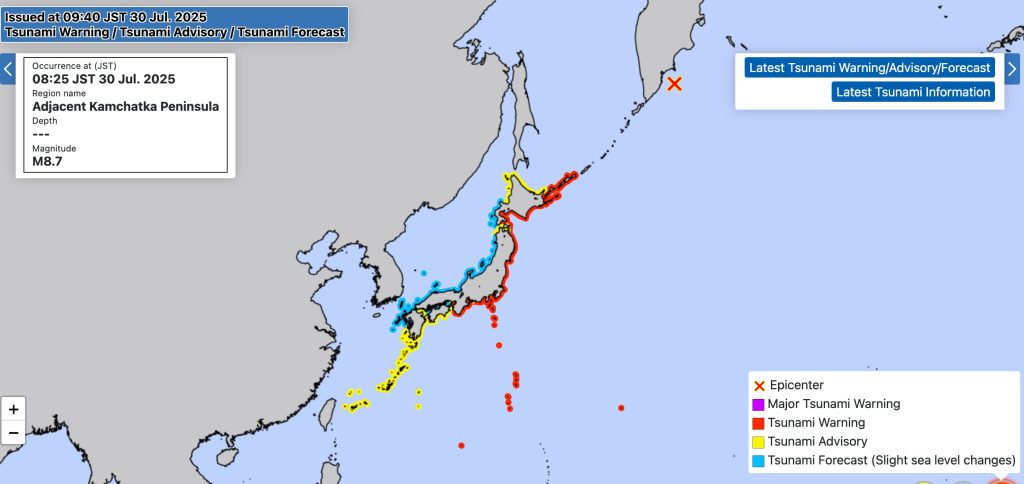
At around 8:25 AM (JST) on Wednesday, July 30, a powerful earthquake struck eastern Russia near Japan. The epicenter was located near the Kamchatka Peninsula, and the magnitude of the earthquake is estimated to be 8.0.
While there was no damage reported in Japan, the Japan Meteorological Agency has issued a warning that a tsunami may reach Japan due to the earthquake.
This article explains the details of the earthquake and the potential tsunami threat.
Earthquake Information
Epicenter: Near the Kamchatka Peninsula, Russia (approximately 1,200 km northeast of Hokkaido)
Time of occurrence: Around 8:25 AM on Wednesday, July 30
Magnitude: Estimated at 8.0
Damage in Japan: Shaking of seismic intensity 1 to 2 observed
Tsunami Information
The earthquake occurred near the Kamchatka Peninsula, approximately 1,200 kilometers northeast of Hokkaido in northeastern Japan. While the earthquake did not cause any damage in Japan, there is a risk that a tsunami may reach Japan’s Pacific coast.
In some parts of Hokkaido, tsunami waves are expected to reach heights of up to 3 meters. In most areas along Japan’s Pacific coast, waves as high as 1 meter are expected.
However, depending on the coastal geography, the tsunami could be higher than expected.
The estimated time of tsunami arrival is between 10:30 AM and 12:00 PM on Wednesday, July 30.
What You Need to Keep in Mind During a Tsunami Warning
Tsunamis Are the Real Danger
90% of fatalities in the 2011 Great East Japan Earthquake were caused by the tsunami, not the earthquake itself.
Tsunamis can arrive as soon as 10 minutes after an earthquake.
The highest recorded tsunami during the 2011 disaster reached approximately 40 meters (131 feet)—the height of a 15-story building.
Immediate Actions to Take
If you’re near the coast when an earthquake strikes, assume a tsunami is coming and evacuate immediately to higher ground.
In the 2011 disaster, the tsunami took 30–40 minutes to reach some areas. However, during the 2024 Noto Peninsula Earthquake, the tsunami arrived in just 10–15 minutes. Since tsunami arrival times vary depending on the earthquake’s location and strength, do not wait for official warnings—evacuate as quickly as possible.
How High Should You Go?
The 2011 tsunami reached 40 meters (131 feet) in some areas, proving that small buildings near the shore are not safe. While the exact height of a tsunami depends on many factors, avoid assuming a second-floor building will provide sufficient protection. Always move to the highest ground possible.
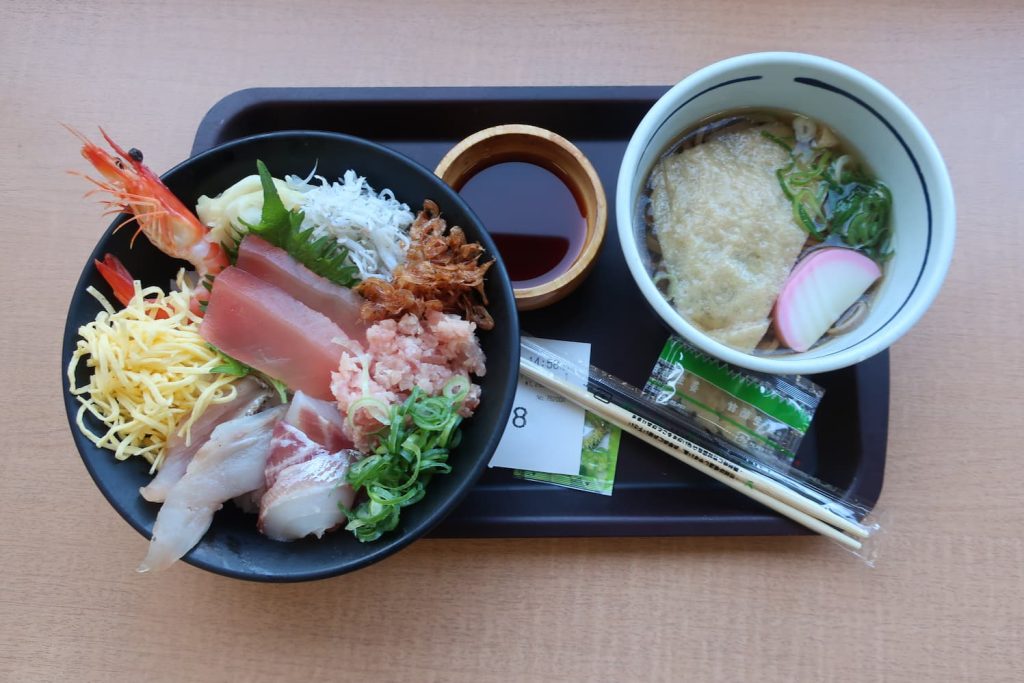
One of the best parts of traveling in Japan is the food. From high-end restaurants that offer exquisite meals and unique experiences to affordable chain eateries serving delicious dishes, Japan boasts a wide variety of dining options. It’s no surprise that most travelers end up visiting many local restaurants during their stay.
However, dining in Japan may involve rules and customs that differ from those in your home country. While some etiquette might be familiar, there are also unique Japanese customs that may surprise you. Without knowing them, you might unknowingly break a rule and risk causing discomfort—or even conflict—with restaurant staff.
In this article, we’ll walk you through the key rules and etiquette to observe at Japanese restaurants, ensuring you enjoy your meals without any trouble.
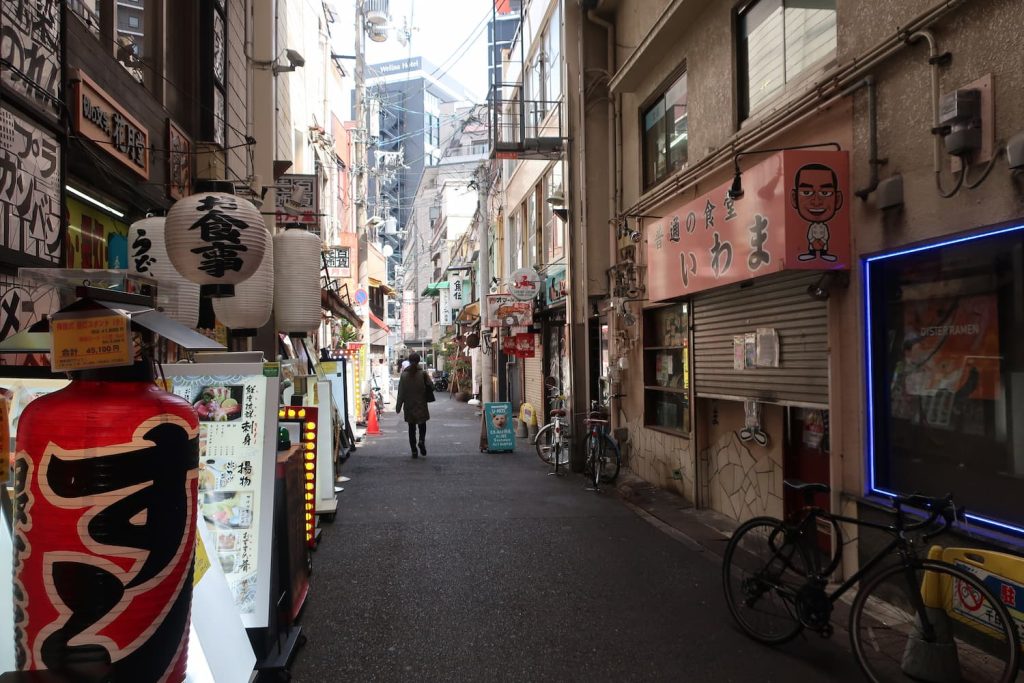
Expect a Table Charge and “Otoshi” at Izakayas and Bars
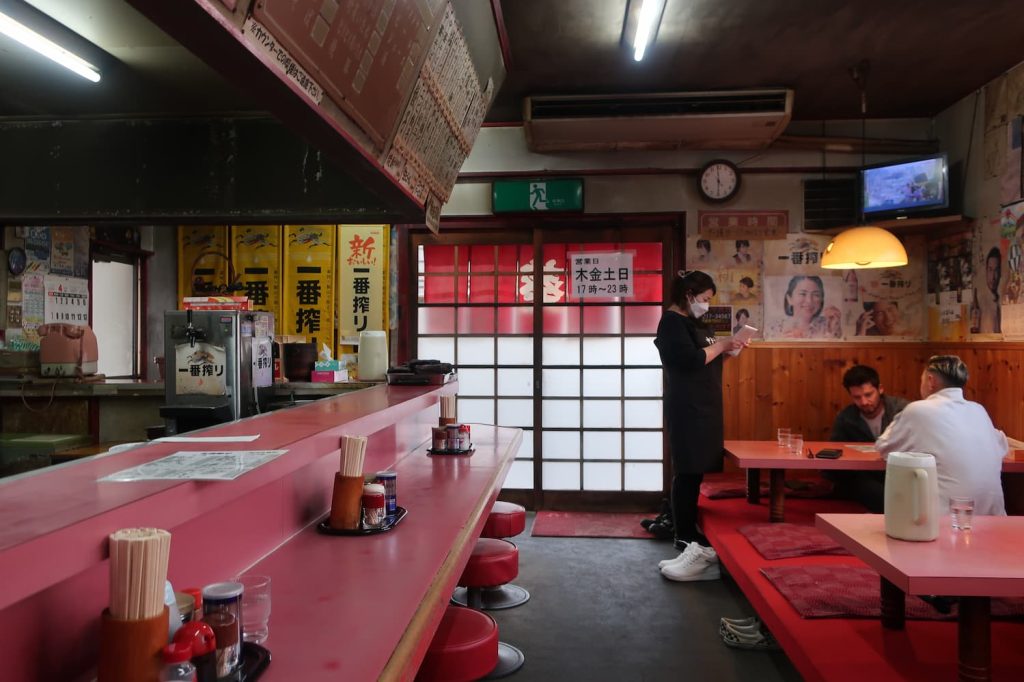
In Japan, it’s common for izakayas (Japanese-style pubs) and bars to charge a table fee, known as a table charge or seating fee. When you sit down at an izakaya, you’ll typically be served a small appetizer called “otoshi ”(お通し) or “tsukidashi”(突き出し), even if you didn’t order it. This small dish is part of the table charge, which usually costs a few hundred yen.
This fee exists because izakayas are places where people often stay for extended periods while enjoying drinks and a variety of food. The longer dining times mean fewer customer turnovers, so the table charge helps compensate for that. It’s important to know that this appetizer cannot usually be declined, as it’s considered part of the service.
Similarly, bars may also serve a light snack along with the table charge. Be prepared for these charges and understand they are standard practice in Japan’s dining culture.
Order One Item Per Person as a General Rule
Unless you’re at an izakaya or a restaurant specializing in large, shareable dishes like Chinese cuisine, the norm in Japan is for each person to order at least one item. Even at cafes, it’s considered bad manners for a group to order only one drink or dish while occupying space for multiple people.
This custom helps ensure fair business for restaurants. If a table is occupied by people who aren’t ordering, it prevents the restaurant from serving other paying customers. To be respectful, make sure everyone in your party orders something.
Smoking Is Only Allowed in Designated Areas or Smoking-Permitted Venues
Japan has strengthened its anti-smoking laws in recent years. Since 2020, due to amendments to the Health Promotion Law, passive smoking is strictly regulated. Most restaurants are now completely non-smoking, unless they have a designated smoking area.
If you wish to smoke, check in advance whether the restaurant allows smoking or has a separate smoking space. Never smoke in a non-smoking area, as doing so can lead to complaints or penalties.
Avoid Talking on the Phone Inside Restaurants
In Japan, talking on your mobile phone in public places like trains or restaurants is considered impolite. This applies to dining establishments as well.
If you must take a phone call, step outside or move to a designated area where you won’t disturb others. Using your phone for texting or browsing social media silently is acceptable, but always keep your phone on silent or vibration mode.
Ask for Permission Before Filming Videos Inside Restaurants
With the rise of social media and travel vlogging, many visitors want to record their dining experiences. However, video recording inside restaurants is often discouraged in Japan.
Filming without permission can violate the privacy of other customers and cause issues for the restaurant. Some establishments strictly prohibit filming, especially for platforms like YouTube .
If you wish to record, always ask for permission from the restaurant staff first. They may direct you to a suitable area or let you know what’s acceptable.
Even at All-You-Can-Eat Restaurants, Don’t Waste Food
Japan has many all-you-can-eat (tabehodai) and all-you-can-drink (nomihodai) restaurants. While these are popular among locals and tourists alike, leaving large amounts of food uneaten is frowned upon.
Even in buffet-style restaurants, you are expected to finish what you take. Wasting food not only leads to unnecessary disposal but also increases the restaurant’s cost to restock dishes. In fact, some restaurants now impose penalties or additional charges if customers leave too much uneaten food.
Take only what you can finish, and enjoy responsibly.
Do Not Bring Outside Food or Drinks into Restaurants
Like in most countries, bringing outside food or beverages into Japanese restaurants is generally not allowed.
This rule helps maintain the restaurant’s hygiene, food safety, and business policies. For example, if a customer suffers food poisoning, it’s difficult to determine whether it came from the restaurant’s food or the outside item they brought in.
Exceptions may be made for people with allergies or dietary restrictions, but in general, it’s best to avoid bringing your own food or drinks.
Conclusion: Enjoy Japanese Dining by Respecting Local Etiquette
Dining in Japan is a unique and memorable experience—made even better when you understand and respect local customs. Japanese restaurant etiquette emphasizes consideration for others, politeness, and order.
By learning and following these simple rules, you’ll avoid unnecessary misunderstandings and ensure a more enjoyable experience for yourself and those around you. Whether you’re planning your first trip to Japan or returning for another culinary adventure, keeping these tips in mind will help you make the most of Japan’s rich food culture.
One of the highlights of traveling in Japan is undoubtedly the food. Japan offers a wide variety of dining options, from luxurious restaurants providing unique culinary experiences to affordable yet delicious chain eateries.
While dining in your hotel room presents no particular issues, you should be mindful of certain etiquette when eating at restaurants, or especially when dining with Japanese acquaintances or business partners.
Observing proper table manners is important. Violating Japanese dining etiquette—even unintentionally—may draw cold stares or disapproval from those around you.
This article introduces some of the most important and widely observed dining manners in Japan.
Using chopsticks can be tricky if you’re not used to them. While it’s generally understandable for non-Japanese to struggle, there’s one rule that should never be broken: never stick chopsticks vertically into rice or any dish.
This resembles a ritual in Japanese funerals, where rice is offered to the deceased with chopsticks standing upright in a bowl. Because of this strong association with death, doing so at the dining table is considered extremely inappropriate and even offensive. Always lay your chopsticks flat or on a holder when not using them.
Avoid Passing Food Chopstick-to-Chopstick
You might occasionally want to offer food to someone else during a meal. However, never transfer food directly from your chopsticks to another person’s chopsticks.
This also recalls a funeral custom where bones of the deceased are passed from chopsticks to chopsticks before being placed in an urn. Because of its connection to death, this action is a strict taboo. Instead, place the food on the other person’s plate or a shared dish.
Avoid Making Noise While Eating
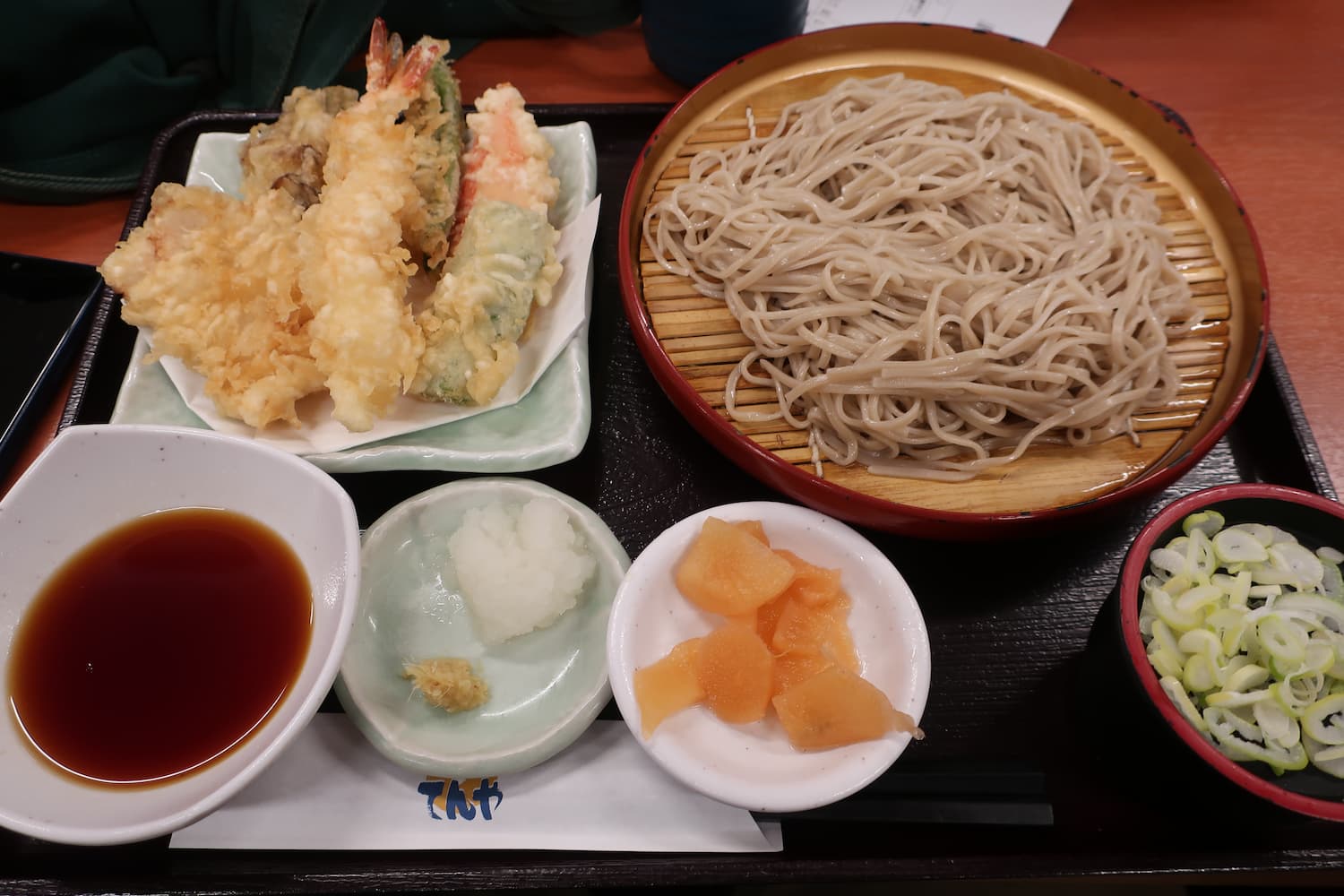
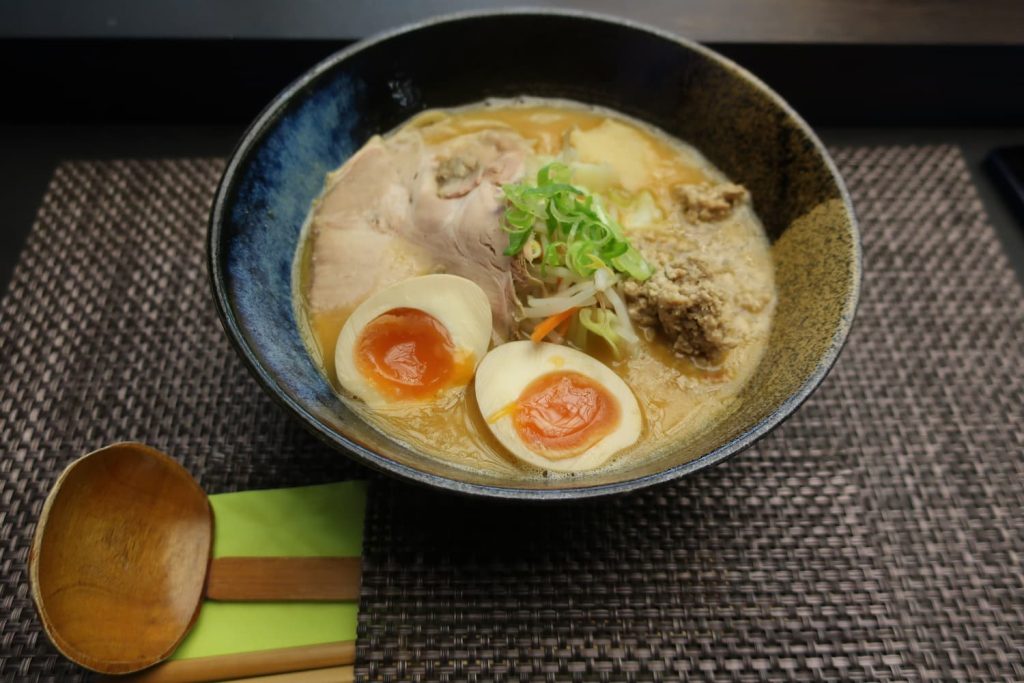
Thanks to platforms like YouTube, many have seen Japanese people slurping noodles like ramen. This may give the impression that making noise while eating is acceptable in Japan. In fact, only certain noodles like ramen, soba, and udon are exceptions—slurping them is considered culturally appropriate and even enhances the flavor.
For all other foods, however, making noise (such as smacking or chewing loudly) is considered bad manners. Be especially careful not to chew like you would gum, which can be very unpleasant for those around you.
Try Not to Leave Food Behind
When invited to a meal by friends or business partners in Japan, it’s best to finish everything on your plate. Leaving food can imply that the meal wasn’t good or that you’re being wasteful, which is frowned upon.
If you have dietary restrictions or find the food not to your taste, it’s acceptable to leave some, but it’s best to communicate politely—such as mentioning an allergy. If you’re not sure you can finish a meal, consider requesting a smaller portion in advance.
Note: Many all-you-can-eat restaurants in Japan may charge an additional fee if you take more food than you can eat and leave leftovers. Be mindful not to over-serve yourself.
Hold Your Rice and Soup Bowls While Eating
In Japan, it’s customary to lift your rice bowl or soup bowl (such as miso soup) when eating. Leaving bowls on the table and bending over to eat is known as “inu-gui”, or “dog-like eating,” and is considered impolite.
Holding the bowl close helps you eat more gracefully and minimizes spills or noise. Other dishes like side plates can remain on the table, but rice and soup should be lifted in hand as a sign of respect and care.
Use Serving Utensils for Shared Dishes
Japanese meals often include shared dishes served in large platters or pots. When serving yourself from a shared dish, never use your own chopsticks or spoon, as this is considered unhygienic.
Always use the provided serving utensils. If none are available, you can politely mention it to others before using your own chopsticks to take food, so it doesn’t come across as inconsiderate.
Don’t Season Shared Dishes Without Asking
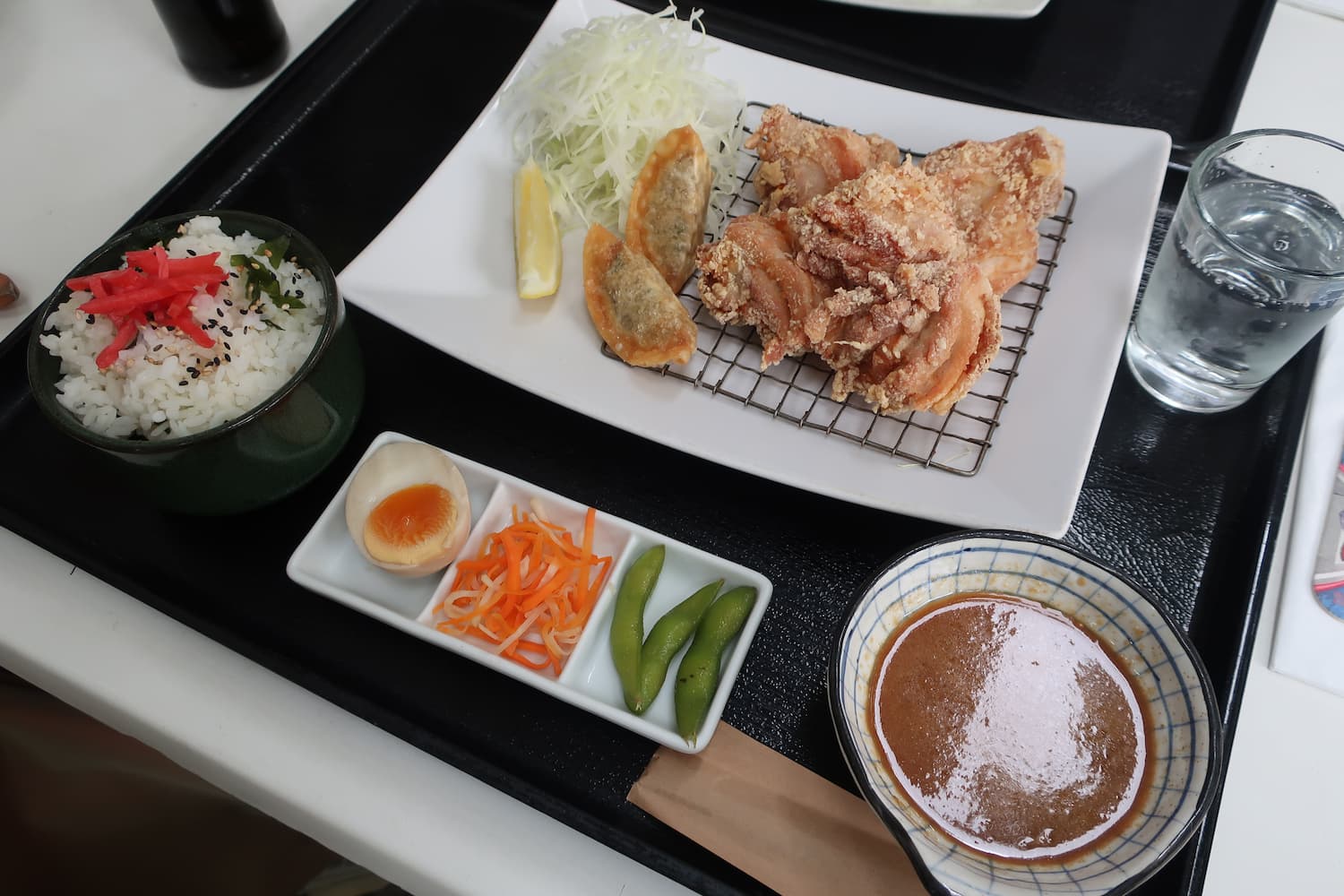
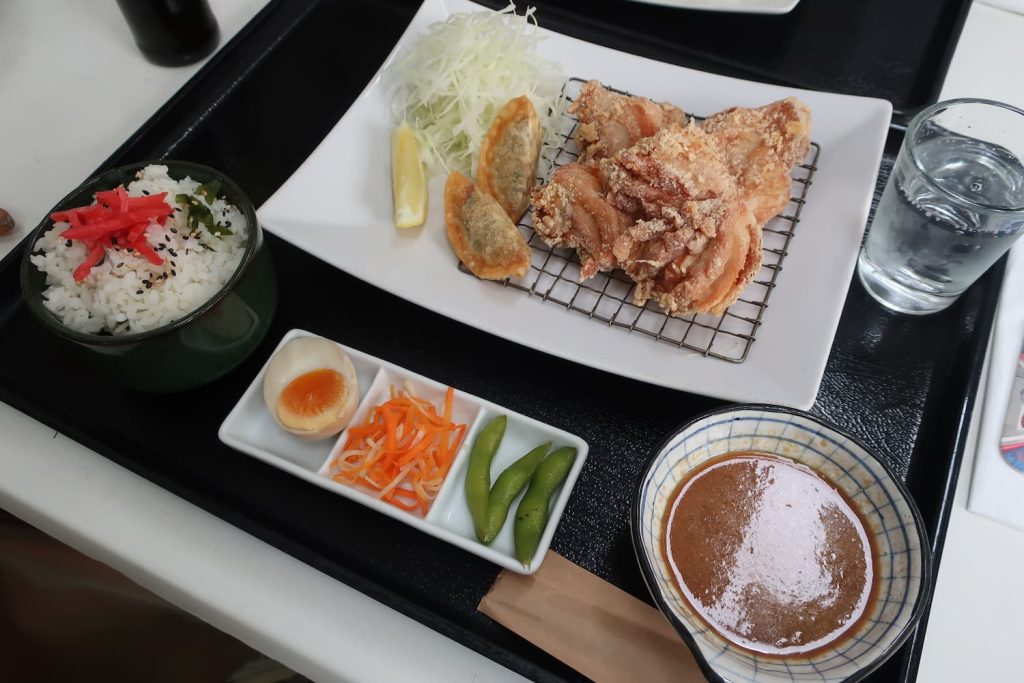
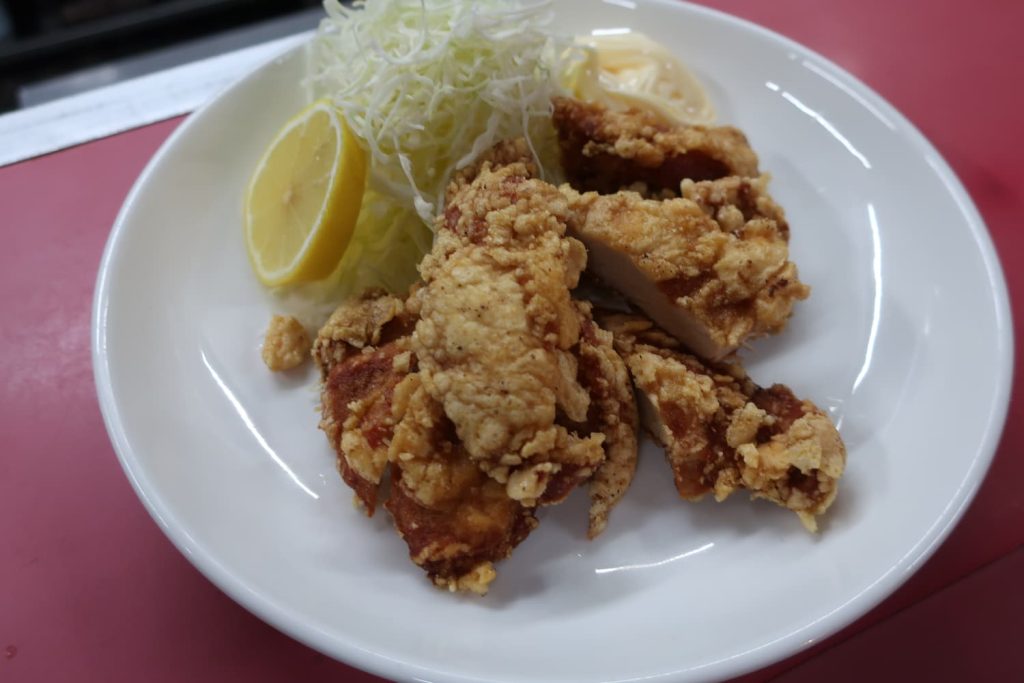
In group meals where dishes are shared, avoid adding your own seasoning to communal food. A common example is squeezing lemon over an entire plate of karaage (fried chicken) without checking if others are okay with it.
While not strictly forbidden, this can bother those who dislike such flavorings. It’s more polite to wait until you’ve served yourself before adding condiments or seasonings to your portion.
Conclusion
Japanese dining etiquette is rooted in the principles of not causing discomfort, avoiding waste, and showing gratitude for the meal. Understanding and respecting these customs allows you to better appreciate Japanese food culture and build positive relationships with those you share a meal with.